
Blog
Independent Living vs. Assisted Living: What Families Should Know

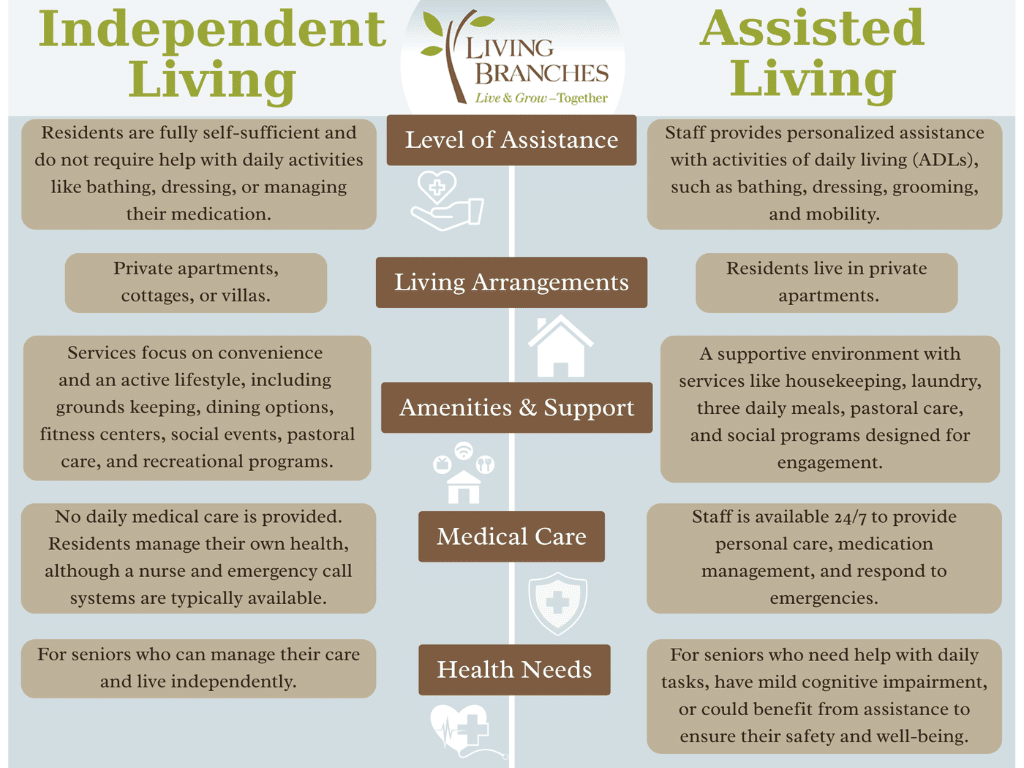
Choosing the right senior living option is a meaningful decision that touches health, autonomy, lifestyle, and finances. Families often compare independent living and assisted living, and while they share community benefits like social activities and maintenance-free living, they are designed for different needs. Understanding how these models differ can help you select an environment that supports safety and wellbeing while honoring personal preferences.
What Independent Living Prioritizes
Independent living is designed for older adults who are largely self-sufficient and want a simpler, more connected lifestyle. The emphasis is on convenience, social connection, and freedom from household chores. Residents typically enjoy private apartments, curated activities, restaurant style dining, transportation, and maintenance services. Healthcare support is not a core feature, though wellness programs and fitness offerings are common.
This model works well for individuals who want to downsize or feel ready for a community focused lifestyle but do not need daily assistance. The environment encourages engagement, learning, and recreation through clubs, classes, cultural outings, and volunteer opportunities. Families often choose independent living to improve quality of life and reduce isolation, while preserving independence and control over daily routines.
When Assisted Living Becomes the Better Fit
Assisted living is designed for residents who benefit from support with activities of daily living. This may include help with bathing, dressing, medication reminders, mobility, or personal care. The goal is not to replace independence but to provide tailored assistance that makes each day safer and more manageable.
Care is personalized and typically delivered through a care plan that can flex as needs change. Communities maintain a homelike environment with the same social benefits found in independent living, but add trained staff on site and greater safety measures. For families, assisted living provides reassurance that support is available around the clock, which can reduce stress and improve overall wellbeing for both the resident and their loved ones.
Comparing Lifestyle, Safety, and Social Connection
Both models offer vibrant social calendars, shared amenities, and restaurant style dining, yet the rhythm of daily life can feel different. Independent living tends to emphasize freedom of choice and self-directed schedules. Assisted living keeps that spirit of choice, while adding more structure around health and safety.
Safety features may be present in both, but they are often more comprehensive in assisted living. Examples include call systems, routine wellness checks, and staff trained to respond to urgent needs. Lifestyle programming also adapts. In assisted living, activities may be designed with accessibility, energy levels, and cognitive support in mind. The best communities provide opportunities that feel inclusive, purposeful, and enjoyable, no matter a resident’s level of support.
How to Think Through Costs and Value
Pricing models can vary across communities and markets. Independent living typically bundles housing, utilities, dining, and amenities into a monthly fee. Assisted living includes those elements plus a care component that scales with the level of assistance. This means two residents in the same assisted living community may pay different amounts if their care needs are not the same.
When comparing costs, look beyond top line numbers to the value included. If assisted living replaces frequent in-home care or reduces medical risks, it may offer strong long-term value. Likewise, if independent living replaces home maintenance, dining out, gym memberships, and transportation, the cost may align closely with current spending. Ask for detailed price breakdowns, care level descriptions, and how rate changes are communicated over time.
Planning for Today’s Needs and Tomorrow’s Possibilities
A helpful way to decide between independent and assisted living is to assess needs in two time horizons. First, consider what is working well now and what support would improve daily life. Second, explore what might change in the next one to two years. Mobility, medication needs, or cognitive health may evolve. Choosing a community that can adapt with you reduces the need for future moves and supports stability.
Some communities offer both independent and assisted living within one campus. This continuity can be a major advantage if needs change. When touring, ask how transitions work, whether couples can remain close if one partner needs more support, and how care planning is updated. Communities like Discovery Village Chevy Chase often provide clear pathways for residents to access more assistance if needed while remaining connected to familiar spaces, friends, and routines.
Making an Informed, Confident Decision
The most helpful insights often come from spending time on site. Tour during a meal and an activity to experience the atmosphere and pace. Notice how staff interact with residents, how accessible the spaces feel, and whether the community reflects the interests and preferences that matter most to you or your loved one. Ask about staff training, care coordination, dining flexibility, transportation, and how residents shape the activity calendar.
It can also help to involve trusted professionals. Primary care providers, care managers, or therapists can offer guidance on the level of support that would be most beneficial. Many families also find value in speaking with current residents and families to learn how the community supports the transition and day-to-day life.
Conclusion
Independent living and assisted living both aim to enhance quality of life, but they serve different needs. Independent living prioritizes autonomy within a supportive, maintenance free environment, while assisted living adds personalized care that safeguards daily wellbeing. By comparing lifestyle preferences, safety needs, costs, and long-term plans, families can choose a setting that supports comfort, connection, and peace of mind. With careful evaluation and a focus on what matters most, it is possible to find a community that feels like home now and adapts gracefully to the future.

The Life and Style of Jalynn Elordi: A Glimpse Behind the Scenes

Why Dallas Corporate Housing Sets a New Residential-Style Luxury during the World Cup

Independent Living vs. Assisted Living: What Families Should Know

The Story Behind Akon’s Net Worth and His Rise to Fame

Peter Tuchman Net Worth Revealed: The Face Behind Wall Street’s Chaos

George Michael’s Net Worth and the Stories You Might Not Know
-
 Celebrity5 months ago
The Story Behind Akon’s Net Worth and His Rise to Fame
-
 Celebrity10 months ago
Peter Tuchman Net Worth Revealed: The Face Behind Wall Street’s Chaos
-
 Celebrity4 months ago
George Michael’s Net Worth and the Stories You Might Not Know
-

 Fashion10 months ago
Aron Accurso Net Worth: A Look Into the Musical Genius Behind Ms. Rachel