
Life Style
Beyond “Green Talk”: Practical Steps to Improve Material Recovery

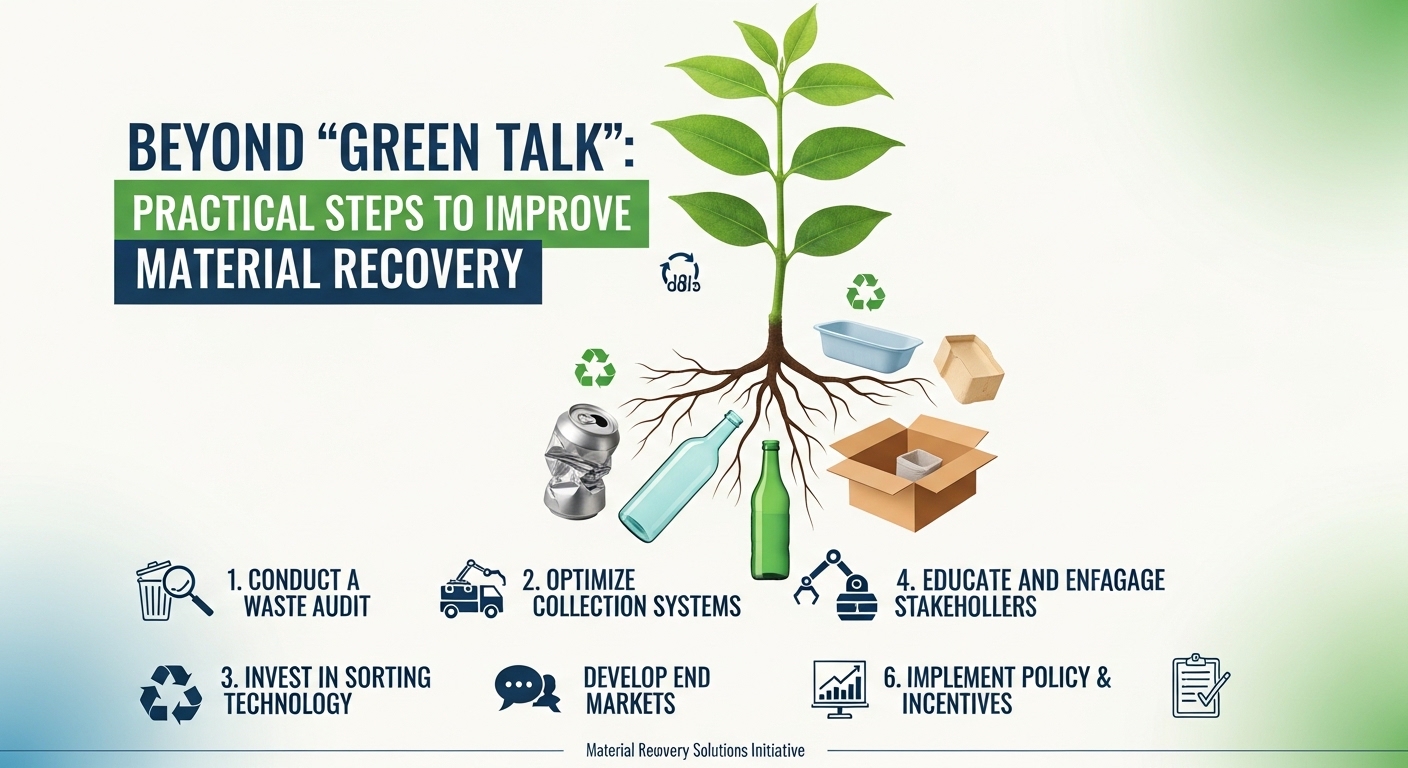
Sustainability conversations are easy to start and harder to translate into real outcomes. Many organizations publicly commit to waste reduction or recycling goals, yet still struggle with low diversion rates, contamination, or inconsistent results across locations. Improving material recovery requires moving past broad statements and into practical, repeatable actions that align daily operations with long‑term goals.
The most effective strategies focus less on labels and more on systems. When recovery efforts are built into how materials are handled, stored, tracked, and reviewed, progress becomes measurable and sustainable. The following steps outline how organizations can turn intent into impact without adding unnecessary complexity.
Understand What Is Actually Being Thrown Away
Material recovery improves fastest when decisions are grounded in reality, not assumptions. Many organizations underestimate how much recyclable or reusable material ends up in the trash, or overestimate how well current systems are working. A basic waste assessment can reveal patterns that are otherwise invisible, such as which departments generate the most recoverable material or where contamination occurs most often.
This does not require a deep technical audit. Even a short review of dumpsters, compactors, and recycling areas can highlight missed opportunities. Common findings include cardboard placed in trash due to full recycling containers, mixed materials caused by unclear signage, or valuable scrap disposed of simply because there is no designated stream. Once these issues are visible, it becomes easier to prioritize changes that actually improve recovery rates.
Design Recovery Systems Around Daily Operations
Recovery systems work best when they match how people already move and work. If recycling requires extra steps, inconvenient locations, or confusing decisions, participation drops quickly. Practical improvement starts with container placement, clear labeling, and right‑sizing equipment to match volume.
For industrial and manufacturing environments, this often means separating materials at the point of generation rather than relying on downstream sorting. Dedicated containers for scrap, pallets, or specific production byproducts reduce contamination and increase the likelihood that materials can be recovered. In office or mixed‑use settings, simplifying streams and reducing “maybe recyclable” categories can have a similar effect.
Some organizations strengthen this approach by aligning internal layouts with external service capabilities. For example, teams working with industrial waste management support may adjust container types, pickup schedules, or compaction methods so that materials are collected and processed more efficiently, without changing how employees do their jobs. This alignment helps recovery efforts feel like part of normal operations rather than an added initiative.
Reduce Contamination Through Clarity, Not Policing
Contamination is one of the biggest barriers to material recovery, and it is rarely solved by more rules alone. In most cases, contamination happens because people are unsure, rushed, or working with inconsistent guidance. Clear, consistent instructions outperform long lists of dos and don’ts.
Effective organizations standardize labels across locations, use plain language, and show examples of what belongs in each stream. Visual cues are especially helpful in high‑traffic or noisy environments where quick decisions matter. When possible, limit the number of streams to those that can be reliably managed and processed.
Training should be brief and recurring, not a one‑time event. Short refreshers during onboarding, shift changes, or safety meetings keep expectations clear without overwhelming staff. When contamination is addressed as a system issue rather than an individual failure, participation and results tend to improve.
Use Data to Guide Incremental Improvements
Material recovery is not a one‑time fix. It improves through small, informed adjustments made over time. Tracking a few meaningful data points can guide those adjustments without creating reporting fatigue. Useful metrics might include contamination trends, changes in service frequency, or estimated diversion by stream.
Regular reviews help teams spot where recovery is improving and where it is stalling. For multi‑site organizations, consistent reporting across locations makes it easier to identify best practices and replicate them elsewhere. Data also supports better conversations with leadership by shifting discussions from goals to outcomes.
Importantly, data should lead to action. If reports show recurring overflow, the solution may be a larger container or an extra pickup. If diversion stalls, it may be time to revisit signage or training. When data is tied to practical decisions, recovery efforts stay relevant and effective.
Build Accountability into Routine Reviews
The most successful recovery programs are reviewed as part of normal operations, not treated as side projects. This can be as simple as adding waste and recycling checkpoints to existing safety walks, facility inspections, or internal audits. Regular reviews reinforce expectations and catch small issues before they grow.
Accountability does not require rigid enforcement. Clear ownership, documented follow‑ups, and visible progress are often enough to keep systems on track. Over time, these routines help material recovery become part of how the organization operates, rather than something driven only by sustainability teams.
Conclusion
Improving material recovery is less about ambitious messaging and more about practical design. When organizations understand their waste streams, align systems with daily work, reduce confusion, and use data to guide small improvements, recovery rates tend to follow. These steps do not require advanced technology or complex programs, just consistent attention to how materials move through the operation. By focusing on what actually happens on the ground, organizations can move beyond green talk and make recovery a dependable part of their business.

3 Alternative Methods to Conceive a Child That are Just as Safe as Natural Conception

How to Find Balance in a Stressful Life

Glabridin and Bakuchiol: Fixing the Anti-Aging Formulation Trap

Clint Eastwood Net Worth and Family Life: What You Didn’t Know

Best X Video Downloader Without Watermark — How to Get Clean HD Files

Inside Richard Hammond’s Life: How He Built His Net Worth
-
 Celebrity12 months ago
Clint Eastwood Net Worth and Family Life: What You Didn’t Know
-
 Technology5 months ago
Best X Video Downloader Without Watermark — How to Get Clean HD Files
-
 Celebrity11 months ago
Inside Richard Hammond’s Life: How He Built His Net Worth
-

 Celebrity11 months ago
Mark Normand net worth revealed: his career, lifestyle, and more