
Technology
Beyond the Glow: A Technical Guide to High-Performance LED Strip Systems and Stable Power Integration

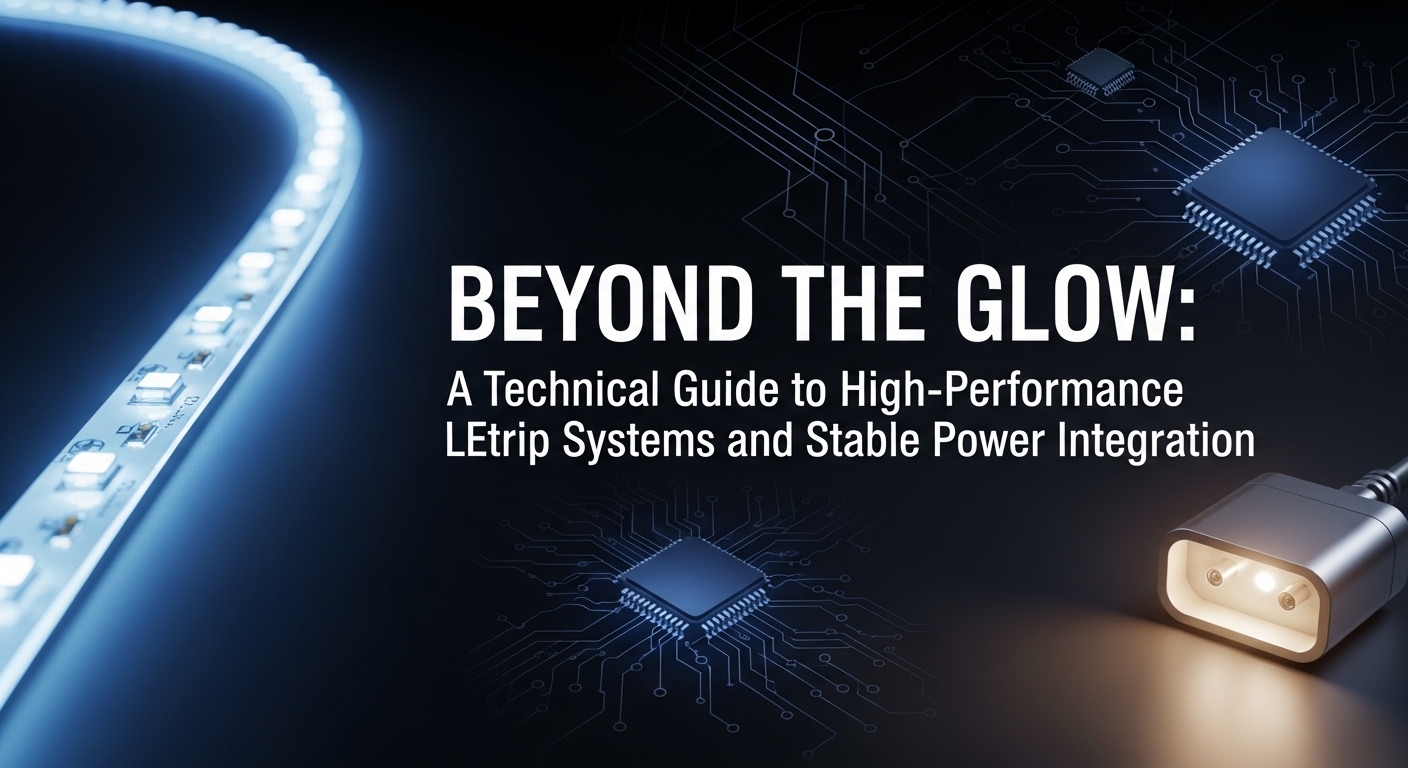
The landscape of architectural lighting has shifted dramatically over the last decade. We have moved past the era of bulky fixtures and visible “dots” of light, entering a phase where illumination is integrated into the very fabric of a building. Linear lighting has become the primary tool for designers seeking to create clean, minimalist environments. However, achieving a high-end finish isn’t just about buying a reel of lights; it requires a sophisticated understanding of how the light source interacts with its electrical foundation.
The Evolution of Linear Lighting
Modern lighting design demands more than just brightness. It requires consistency, color accuracy, and durability. In the past, early LED strips suffered from visible hotspots dark gaps between diodes that ruined the “continuous line” effect. To solve this, the industry transitioned toward high-density configurations. By placing more light-emitting diodes (LEDs) closer together on a flexible circuit board, manufacturers managed to create a smooth, neon-like glow that can be tucked into recessed channels, under cabinetry, or along cove ceilings.
The true secret to a professional installation lies in the synergy between the light source and the hardware driving it. When you source high-quality LED Strip Lights, you aren’t just buying a decorative element; you are investing in a semiconductor system that requires precise thermal management and electrical regulation to perform at its peak for its promised 50,000-hour lifespan.
The Rise of COB (Chip-on-Board) Technology
One of the most significant breakthroughs in recent years is the adoption of COB technology. Unlike traditional SMD (Surface Mounted Device) chips, COB technology places the LED chips directly onto the printed circuit board (PCB) and covers them with a continuous phosphor coating. This eliminates the “beaded” look entirely.
Beyond aesthetics, these high-density strips offer superior heat dissipation. Heat is the primary enemy of LED longevity; when chips are packed tightly, a high-quality PCB with a higher copper weight (typically 2oz or 3oz) is essential to pull heat away from the diodes. This prevents the color shifting or premature dimming that often plagues lower-grade consumer products.
The Silent Backbone: System Stability
While the light strip gets all the visual credit, the power unit is the “heart” of the system. A high-performance strip is only as reliable as the current it receives. This is where the expertise of a specialized LED Power Supply factory becomes invaluable. In commercial or large-scale residential projects, standard “plug-and-play” adapters often fall short. They may lack the surge protection, EMI filtering, or thermal cut-offs necessary for 24/7 operation.
A factory-grade power solution ensures that the voltage remains constant regardless of fluctuations in the main grid. For instance, if you are running a 24V system, even a slight dip to 22V can cause noticeable dimming at the end of a long run. Professional power supplies are engineered to provide a “clean” signal, which is particularly vital when integrating with smart home systems or high-end dimmers that rely on Pulse Width Modulation (PWM).
Solving Common Installation Challenges
One of the most frequent hurdles in linear lighting is “Voltage Drop.” This occurs when the electrical resistance in the copper traces of the strip causes the voltage to decrease as it travels further from the power source. The result is a strip that is bright at the beginning and noticeably dimmer at the end.
To combat this, professional installers often opt for 24V systems over 12V. Because 24V systems draw less current (amperage) for the same amount of power, they experience significantly less voltage drop over long distances. Furthermore, using a power supply that supports “soft start” technology can prevent the initial inrush of current from stressing the LED chips, further extending the life of the entire installation.
Safety and Environmental Ratings
When planning a project, the environment dictates the hardware. An indoor cove in a living room has very different requirements than a linear run along a poolside deck. This is why understanding Ingress Protection (IP) ratings is critical.
- IP20/IP33: Best for dry, indoor areas where dust and moisture aren’t concerns.
- IP65/IP67: Necessary for bathrooms, kitchens, or outdoor landscapes where the strip and power unit might encounter water or heavy humidity.
Working with a dedicated manufacturer allows for customization in these areas. For example, you can request specific IP67-rated power units that are encased in aluminum shells to better dissipate heat in outdoor environments where airflow might be restricted.
Building for Long-Term Reliability
The difference between a “good” lighting project and a “great” one is often invisible to the naked eye at first glance. It’s found in the thickness of the copper on the PCB, the quality of the phosphor in the LEDs, and the internal components of the transformer.
By taking a holistic approach treating the light and the power as two halves of a single machine you reduce maintenance costs and avoid the frustration of flickering lights or burnt-out segments. Whether you are illuminating a hotel lobby or a modern kitchen, the goal is the same: a seamless, flicker-free glow that remains as vibrant five years from now as it is on the day of installation. Utilizing industrial-grade components ensures that the “wow factor” of your design isn’t just temporary, but a permanent feature of the space.

Putting a Smart Module Controller to work in demanding sites

Rihanna and Post Malone: Are They Connected in Music?

Post Malone and Kumar Birla: The Story Behind Them

Clint Eastwood Net Worth and Family Life: What You Didn’t Know

Best X Video Downloader Without Watermark — How to Get Clean HD Files

Inside Richard Hammond’s Life: How He Built His Net Worth
-
 Celebrity1 year ago
Clint Eastwood Net Worth and Family Life: What You Didn’t Know
-
 Technology6 months ago
Best X Video Downloader Without Watermark — How to Get Clean HD Files
-
 Celebrity12 months ago
Inside Richard Hammond’s Life: How He Built His Net Worth
-

 Celebrity1 year ago
Mark Normand net worth revealed: his career, lifestyle, and more