
Celebrity
Roger Federer and Conor McGregor: Inside Their Careers

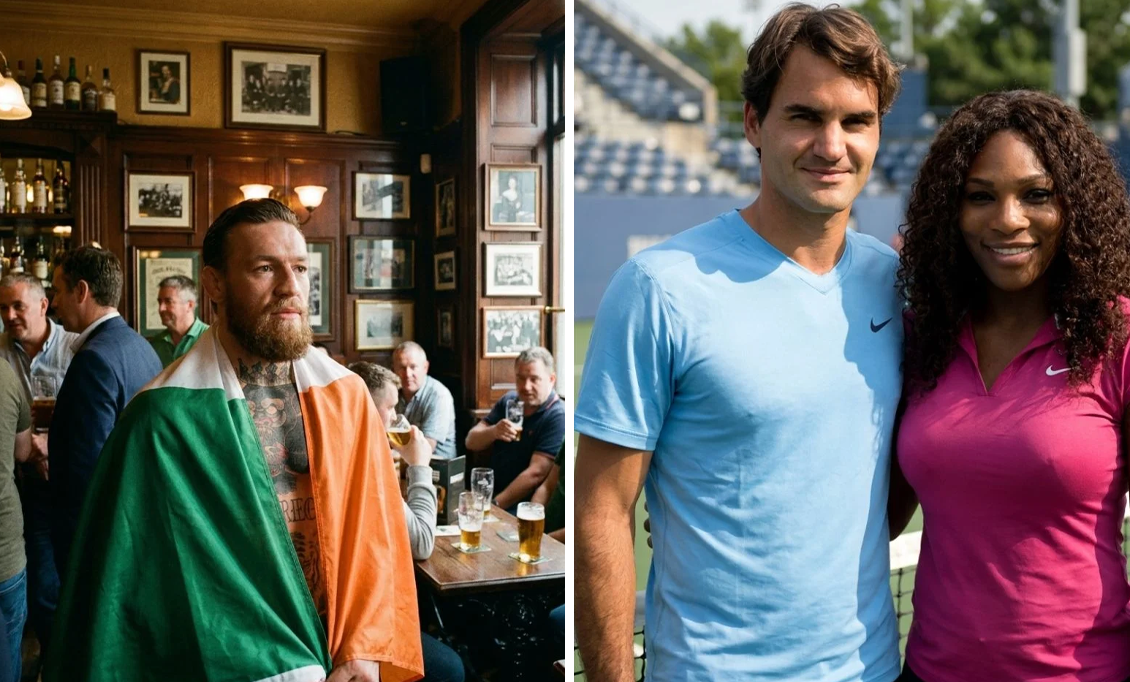
Few athletes have transformed their sports while becoming global celebrities beyond them. Roger Federer and Conor McGregor represent two very different versions of sporting success: Federer built his legacy through tennis, precision, longevity, and an exceptionally decorated career, while McGregor became one of mixed martial arts’ most recognizable figures through championship success, knockout power, personality, and crossover appeal. Although they competed in completely different environments, their careers share themes of ambition, discipline, pressure, reinvention, and worldwide fame. This article explores their backgrounds, career milestones, playing and fighting styles, achievements, business influence, and lasting impact. Looking at both careers side by side also shows why athletic greatness cannot be measured through one statistic alone.
Biography of Roger Federer and Conor McGregor
| Detail | Roger Federer | Conor McGregor |
|---|---|---|
| Full Name | Roger Federer | Conor Anthony McGregor |
| Born | August 8, 1981 | July 14, 1988 |
| Birthplace | Basel, Switzerland | Dublin, Ireland |
| Sport | Tennis | Mixed Martial Arts |
| Primary Organization | ATP Tour | UFC |
| Playing/Fighting Style | Right-handed, one-handed backhand | Southpaw striker |
| Major Achievement | 20 Grand Slam singles titles | First simultaneous two-division UFC champion |
| Career Highlight | Career Grand Slam | UFC featherweight and lightweight championships |
| Global Recognition | Tennis icon and sports ambassador | MMA superstar and crossover celebrity |
Featured Snippet Answer
Roger Federer and Conor McGregor are two internationally recognized athletes who achieved extraordinary success in different sports. Federer became one of tennis’s most accomplished players with 20 Grand Slam singles titles, while McGregor became the UFC’s first simultaneous two-division champion. Both developed powerful personal brands that extended well beyond competition.
Who Are Roger Federer and Conor McGregor?
Roger Federer and Conor McGregor come from different sporting worlds, but both became influential figures far beyond their individual competitions.
Federer is a Swiss tennis player whose professional career lasted for more than two decades. His elegant technique, serve, movement, tactical intelligence, and ability to adapt helped him remain among the sport’s leading players for years. His career record includes 20 Grand Slam singles titles, a career Grand Slam, and 310 weeks at world No. 1.
McGregor followed a very different path. Born in Dublin, Ireland, he developed through mixed martial arts before entering the UFC in 2013. His confidence, striking ability, knockout power, and willingness to embrace the spotlight quickly made him one of MMA’s biggest stars.
His historic achievement came in 2016 when he defeated Eddie Alvarez at UFC 205 to become the first fighter to hold UFC championships in two weight divisions simultaneously.
The contrast is important:
- Federer competed through rallies, sets, and long tournaments.
- McGregor competed through rounds, tactics, physical exchanges, and rapid finishes.
- Federer became famous for controlled precision.
- McGregor became famous for explosive striking and outspoken confidence.
Their sports were fundamentally different, yet both demonstrated how elite performance can create a global identity.
Roger Federer’s Rise in Professional Tennis
Federer’s journey to the top was built gradually. He became a major force in men’s tennis during the early 2000s, eventually taking the No. 1 ranking in February 2004.
The 2004 season became one of the defining campaigns of his career. Federer won 74 of 80 matches and collected 11 titles, including three Grand Slam championships. The following years strengthened his position as one of tennis’s central figures.
His Grand Slam record demonstrates the breadth of his success:
- 6 Australian Open titles
- 1 French Open title
- 8 Wimbledon titles
- 5 US Open titles
- 20 Grand Slam singles championships overall
He completed the career Grand Slam by winning the French Open in 2009.
What Made Federer Different?
Federer’s game was built around versatility rather than one overwhelming physical weapon.
Important characteristics included:
- Exceptional shot variety – He could attack, defend, change pace, and finish points in multiple ways.
- One-handed backhand – His backhand became one of the most recognizable shots in modern tennis.
- Court movement – Efficient footwork helped him reach difficult balls while remaining balanced.
- Serve placement – Federer frequently used accuracy and variation rather than relying only on raw speed.
- Tactical awareness – He could adjust his approach depending on his opponent and the court surface.
ATP records also document his remarkable consistency, including 310 total weeks at No. 1 and a 65-match winning streak on grass.
Conor McGregor’s Rise in Mixed Martial Arts
Conor McGregor’s career developed differently from Federer’s. Rather than building a reputation through a long tournament season, McGregor became known through individual fights, dramatic finishes, and increasingly significant opponents.
He made his UFC debut on April 6, 2013, defeating Marcus Brimage by first-round knockout. From there, his rise accelerated. He defeated notable opponents including Max Holloway, Dustin Poirier, Chad Mendes, José Aldo, Nate Diaz, and Eddie Alvarez during different stages of his career.
One of his most memorable victories came against José Aldo at UFC 194 in December 2015. McGregor won the UFC featherweight championship with a first-round knockout after just 13 seconds.
Less than a year later, he defeated Eddie Alvarez at UFC 205 to capture the lightweight championship. That victory made him the first UFC fighter to simultaneously hold championships in two divisions.
What Made McGregor Different?
McGregor’s identity inside combat sports was built around several elements:
- Precision striking
- Counterpunching
- Timing and distance control
- Southpaw stance
- Knockout power
- Mental pressure and confidence
- Ability to generate enormous public attention
His personality became an important part of his career. Press conferences, interviews, promotional events, and pre-fight narratives helped turn individual fights into major entertainment events.
The UFC’s official career profile records 19 knockout victories and identifies his historic two-division championship achievement as a central part of his career.
Roger Federer and Conor McGregor: A Career Comparison
Comparing Federer and McGregor requires care because tennis and MMA measure success differently. A tennis player may compete dozens of times during a season, while an MMA fighter’s schedule can be much more limited because of training camps, injuries, recovery, and the physical demands of fighting.
| Category | Roger Federer | Conor McGregor |
|---|---|---|
| Sport | Tennis | MMA |
| Competitive Format | Matches and tournaments | Individual fights |
| Major Championships | 20 Grand Slam titles | UFC titles in two divisions |
| Signature Skill | Versatile tennis technique | Precision striking |
| Career Identity | Consistency and longevity | Explosiveness and spectacle |
| Global Appeal | Tennis and international sport | MMA and crossover entertainment |
| Major Career Theme | Sustained excellence | Rapid rise and reinvention |
Federer’s career was particularly defined by longevity and consistency. McGregor’s was heavily shaped by high-impact moments and championship breakthroughs.
Neither career can be accurately reduced to a single number.
Different Sports, Similar Lessons
1. Building a recognizable identity
Federer developed an image associated with elegance, professionalism, and technical excellence. McGregor developed a far more outspoken identity centered around confidence, confrontation, and entertainment.
Both understood that elite athletes increasingly become brands as well as competitors.
2. Adapting under pressure
Federer repeatedly adjusted his game throughout a long career as younger generations entered tennis.
McGregor also had to adapt after opponents studied his techniques and his own career changed through injuries, different weight classes, and periods away from competition.
3. Turning moments into history
Federer’s 2009 French Open victory completed his career Grand Slam. McGregor’s victory over Eddie Alvarez in 2016 created UFC history by giving him two championships simultaneously.
These moments mattered because they were not simply individual wins. They became defining chapters in each athlete’s public story.
Career Longevity and Reinvention
Longevity looks very different in tennis and MMA.
Federer’s professional career extended across multiple generations of players. He experienced periods of dominance, injuries, comebacks, and changes in the competitive landscape. His 2017 season was particularly notable because he returned to Grand Slam success and won Wimbledon for an eighth time.
McGregor’s career has followed a more interrupted pattern. His rise was extremely rapid, but injuries and periods away from competition significantly affected his timeline.
In 2021, McGregor suffered a serious leg injury during his trilogy fight with Dustin Poirier. He subsequently spent years away from UFC competition. The UFC reported that he returned in July 2026 for a fight against Max Holloway, following a five-year absence.
This difference highlights an important point: career longevity is not simply about the number of years between debut and retirement. It also involves health, competition, recovery, motivation, performance level, and the demands of the sport.
Their Influence Beyond Sports
Roger Federer’s Broader Influence
Federer’s influence expanded beyond tennis through sponsorships, philanthropy, public appearances, and his position as an international sports ambassador.
His public image was closely connected to professionalism and tennis excellence. Even after his competitive career, his name remains strongly associated with the modern history of the sport.
Conor McGregor’s Broader Influence
McGregor helped expand MMA’s mainstream profile through his personality and promotional ability. His career also crossed into professional boxing when he faced Floyd Mayweather in 2017.
His ability to generate attention became a significant part of the commercial side of combat sports. The UFC itself has described him as an athlete who helped attract wider attention to MMA.
His influence therefore extends beyond fight statistics into entertainment, promotion, business, and popular culture.
Pros and Cons of Their Career Approaches
A comparison of their careers also reveals different advantages and challenges.
Roger Federer’s Career Model
Strengths:
- Exceptional long-term consistency
- Multiple Grand Slam championships
- Adaptability across generations
- Strong international reputation
- Technical versatility
Challenges:
- Maintaining physical health over a very long career
- Competing against several generations of elite players
- Managing injuries later in his career
- Remaining competitive as athletic demands changed
Conor McGregor’s Career Model
Strengths:
- Exceptional knockout ability
- Historic two-division championship achievement
- Strong promotional presence
- Ability to create major sporting events
- Successful transition into crossover entertainment
Challenges:
- Injuries affecting career continuity
- Long periods away from competition
- Difficult weight-class demands
- Increased pressure created by global fame
These differences show that sporting success can follow very different paths.
What Fans Can Learn From Federer and McGregor
Although their personalities and sports are very different, their careers offer several practical lessons for athletes and ambitious individuals.
Focus on a Core Skill
Federer built his career around technical mastery of tennis. McGregor developed a highly recognizable striking style.
Mastery creates a foundation for everything else.
Understand Your Competitive Environment
Federer had to understand surfaces, opponents, tournament formats, and changing generations.
McGregor had to understand distance, timing, opponents, weight classes, and fight-specific strategies.
Develop Mental Resilience
Elite competition involves setbacks. Losses, injuries, criticism, and changing expectations are part of professional sport.
The ability to return to preparation after disappointment can be just as important as talent.
Build a Sustainable Career
The careers of Federer and McGregor also demonstrate the importance of managing physical demands.
For athletes, long-term success requires attention to:
- Recovery
- Training quality
- Injury prevention
- Nutrition
- Mental preparation
- Career planning
Talent may create an opportunity, but sustainability helps determine how long an athlete can remain competitive.
Also Read: Mitchell Besser: What to Know About His Life and Career
Conclusion
Roger Federer and Conor McGregor built remarkable careers through entirely different sporting disciplines. Federer became a defining figure in tennis through extraordinary consistency, technical skill, longevity, and 20 Grand Slam singles titles. McGregor transformed himself from an Irish MMA prospect into a global combat-sports star and made UFC history as its first simultaneous two-division champion.
Their stories demonstrate that there is no single formula for becoming a globally recognized athlete. One career was built around long-term tournament excellence; the other became famous for explosive performances, championship breakthroughs, and an unmistakable public persona.
Ultimately, the most interesting connection between Federer and McGregor is not that they played the same sport—they did not. It is that both understood how exceptional performance, discipline, identity, and memorable moments can turn an athlete into a worldwide sporting name.
Frequently Asked Questions
Are Roger Federer and Conor McGregor related?
No. Roger Federer and Conor McGregor are not known to be related. Federer is a Swiss tennis player from Basel, Switzerland, while McGregor is an Irish mixed martial artist from Dublin. Their connection is primarily based on their status as internationally recognized athletes from different sports.
Did Roger Federer and Conor McGregor ever compete against each other?
No. Federer and McGregor competed in completely different sports and have not faced one another in an official sporting competition. Federer played professional tennis, while McGregor competed in mixed martial arts and also participated in professional boxing.
How many Grand Slam titles did Roger Federer win?
Roger Federer won 20 Grand Slam singles titles during his tennis career. His major victories included six Australian Open titles, one French Open title, eight Wimbledon titles, and five US Open titles. He also completed the career Grand Slam by winning the French Open in 2009.
What is Conor McGregor best known for?
Conor McGregor is best known for becoming the first UFC fighter to hold championships in two weight divisions simultaneously. He achieved this in 2016 after defeating Eddie Alvarez for the lightweight championship while already holding the featherweight title.
What sports do Roger Federer and Conor McGregor play?
Roger Federer is a professional tennis player, while Conor McGregor is a mixed martial artist. Their sports have very different rules, competitive formats, training requirements, and scoring systems. Federer competed primarily in singles tennis, whereas McGregor’s career has centered on MMA competition.
What makes Federer and McGregor interesting to compare?
Their careers are interesting to compare because they represent two distinct approaches to elite sports fame. Federer became associated with longevity, technical excellence, and Grand Slam success, while McGregor became known for knockout victories, championship achievements, personality, and crossover popularity.

John Grayken and Bruce Broussard: Two Business Worlds

Roger Federer and Conor McGregor: Inside Their Careers

3 Alternative Methods to Conceive a Child That are Just as Safe as Natural Conception

Clint Eastwood Net Worth and Family Life: What You Didn’t Know

Best X Video Downloader Without Watermark — How to Get Clean HD Files

Inside Richard Hammond’s Life: How He Built His Net Worth
-
 Celebrity12 months ago
Clint Eastwood Net Worth and Family Life: What You Didn’t Know
-
 Technology5 months ago
Best X Video Downloader Without Watermark — How to Get Clean HD Files
-
 Celebrity11 months ago
Inside Richard Hammond’s Life: How He Built His Net Worth
-

 Celebrity11 months ago
Mark Normand net worth revealed: his career, lifestyle, and more
Pingback: John Grayken and Bruce Broussard: Two Business Worlds - coremagazine.co.uk