
Celebrity
John Grayken and Bruce Broussard: Two Business Worlds

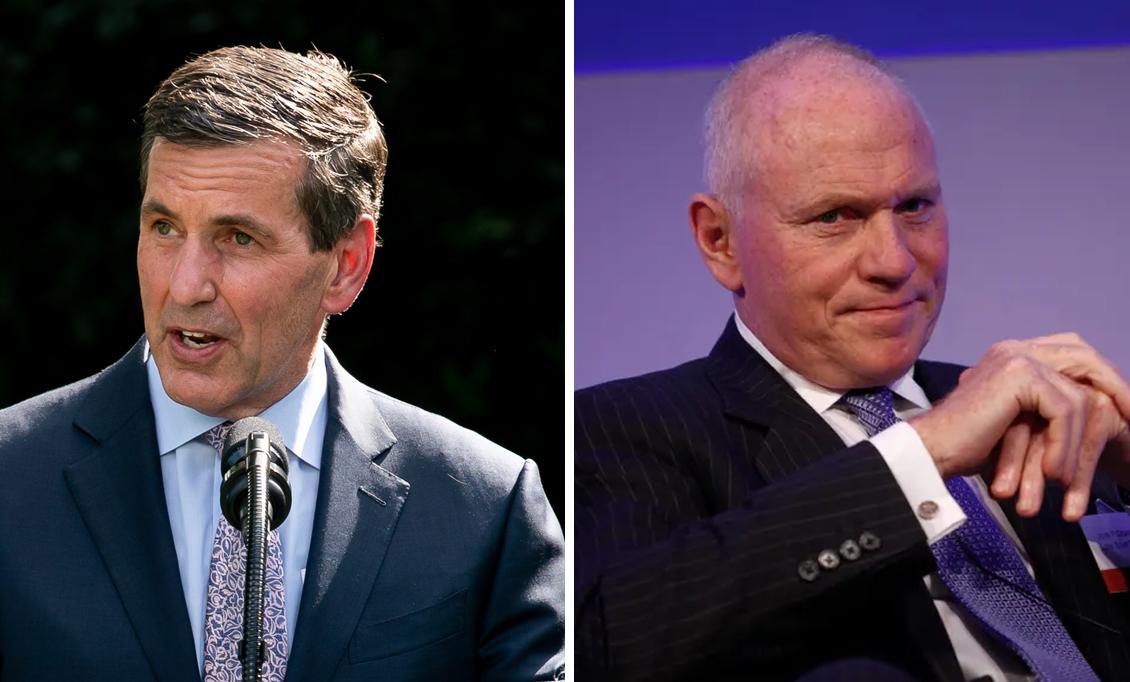
What happens when two successful business leaders build their careers in completely different industries? John Grayken and Bruce Broussard offer an interesting comparison because their professional journeys represent two distinct business worlds. Grayken is best known as the founder and chairman of Lone Star Funds, an investment firm built around opportunities in distressed assets, private equity, and related markets. Broussard, meanwhile, developed his reputation through healthcare leadership, serving as Humana’s president and CEO before later taking on leadership responsibilities in the technology sector.
Although their industries differ considerably, both careers involve capital allocation, strategic decision-making, organizational leadership, and navigating complex markets. This article examines their backgrounds, career paths, leadership approaches, major professional milestones, and the business lessons that can be drawn from their experiences.
Biography of John Grayken and Bruce Broussard
| Detail | John Grayken | Bruce Broussard |
|---|---|---|
| Full Name | John P. Grayken | Bruce D. Broussard |
| Main Field | Private equity and investment management | Healthcare and corporate leadership |
| Best Known For | Founding Lone Star Funds | Leading Humana for more than a decade |
| Major Organization | Lone Star Funds | Humana, later HP |
| Education | University of Pennsylvania; Harvard Business School | Texas A&M University; University of Houston |
| Leadership Focus | Investment, capital allocation, distressed assets | Healthcare, operations, transformation |
| Major Career Role | Founder and Chairman of Lone Star | Former Humana President and CEO; HP Interim CEO |
| Business Experience | More than three decades in investment | More than 30 years in executive leadership |
Featured Snippet Answer
John Grayken and Bruce Broussard are prominent business leaders whose careers developed in different industries. Grayken built Lone Star Funds into a major global investment platform, while Broussard spent much of his career in healthcare leadership, including more than a decade as Humana CEO. In 2026, Broussard became interim CEO of HP.
Who Are John Grayken and Bruce Broussard?
The keyword John Grayken and Bruce Broussard brings together two executives whose professional backgrounds are substantially different but whose careers both demonstrate the importance of strategic decision-making.
John Grayken is an investor and entrepreneur who founded Lone Star Funds in 1995. According to Lone Star, Grayken has been actively involved in investing in opportunistic and other assets for more than 30 years. The firm says funds organized under Lone Star have represented approximately $96 billion in aggregate capital commitments since its first fund.
Bruce Broussard followed a corporate leadership path. His career has been concentrated largely in healthcare, beginning with senior positions at US Oncology and continuing through McKesson and Humana. He served as Humana’s president from 2011 and became CEO in 2013, remaining in that role through 2024.
Their professional worlds can therefore be summarized simply:
- Grayken: investment, private equity, distressed assets and global capital.
- Broussard: healthcare, corporate operations, transformation and executive management.
- Grayken’s central role: building and directing an investment platform.
- Broussard’s central role: managing and transforming large operating businesses.
This difference makes their careers useful to examine together without assuming that they followed the same route to success.
John Grayken’s Business Career
Building Lone Star Funds
John Grayken’s career is closely associated with Lone Star Funds. The firm’s history traces its beginnings to 1995, when Grayken raised $246 million for the Brazos Fund, focused on distressed commercial real estate debt and equity investments in North America.
Lone Star’s strategy later expanded geographically and across asset classes. The firm’s historical timeline describes expansion into Canada, Europe, and Asia, with investments involving financial institutions, real estate, loan portfolios, and other opportunities.
Grayken’s business model has therefore been connected to identifying situations where assets or businesses may offer opportunities for investment and restructuring.
Key elements of Grayken’s career include:
- Founding an investment platform in the 1990s.
- Focusing on distressed and opportunistic investments.
- Expanding internationally across multiple markets.
- Building a large-scale private investment organization.
- Remaining involved as chairman after decades of activity.
Lone Star’s own biography describes Grayken as its founder and chairman and says he has remained actively involved in opportunistic investing for more than three decades.
His career illustrates how investment businesses can develop from a focused strategy into a multinational platform when capital, expertise, market knowledge, and organizational infrastructure are combined.
Bruce Broussard’s Business Career
From Healthcare Executive to Corporate Leader
Bruce Broussard’s professional journey took a different route. His experience was built largely inside healthcare organizations, where he held financial and operational positions before reaching senior executive roles.
At US Oncology, Broussard served in several leadership positions, including Chief Financial Officer, President, CEO, and Chairman. Following the company’s acquisition by McKesson, he became president of McKesson’s Specialty Pharmacy Division.
In 2011, Broussard joined Humana as president. He became CEO in 2013 and led the company until 2024. Humana’s own announcement about his succession described his tenure as a period in which the company developed beyond traditional insurance toward a broader healthcare model integrating insurance and care delivery.
His experience demonstrates a different type of business leadership:
- Managing large operating organizations
- Developing healthcare strategies
- Working with financial and regulatory considerations
- Leading organizational transformation
- Managing technology and analytics initiatives
- Building relationships with boards and stakeholders
Broussard’s career has also continued beyond Humana. HP announced in February 2026 that he would become its interim CEO, citing his more than 30 years of public-company leadership experience.
John Grayken and Bruce Broussard: Key Differences
The most obvious distinction between Grayken and Broussard is the type of organization they have primarily led.
Grayken operates within the world of investment management, where decisions frequently involve evaluating assets, markets, financing structures, risk, and potential returns.
Broussard’s career has largely involved operating businesses, where leaders must manage employees, customers, technology, regulations, finances, and long-term organizational strategy.
| Business Area | John Grayken | Bruce Broussard |
|---|---|---|
| Primary Industry | Investment management | Healthcare and technology |
| Core Role | Investor and firm founder | Corporate executive |
| Main Challenge | Identifying and managing investments | Operating and transforming organizations |
| Geographic Scope | International investment markets | Large corporate and healthcare markets |
| Leadership Model | Investment platform leadership | Operating-company leadership |
| Career Foundation | Finance and investment | Finance, healthcare and operations |
Neither approach is interchangeable. Investment leadership and corporate operating leadership require overlapping skills, but they also demand different forms of expertise.
How Their Business Models Work
Grayken’s Investment-Oriented Model
A private equity and investment platform generally evaluates opportunities before committing capital. Depending on the investment strategy, the process can involve analyzing an asset or company, assessing risk, structuring financing, developing an investment thesis, and eventually seeking an appropriate exit or long-term outcome.
Lone Star’s history illustrates this approach through its focus on distressed assets and later expansion into multiple markets and strategies.
A simplified investment process can look like this:
- Identify an opportunity.
- Analyze financial and market conditions.
- Assess risks and potential returns.
- Structure and execute the investment.
- Manage the asset or investment.
- Evaluate the eventual exit or long-term strategy.
Broussard’s Operating Model
Broussard’s career involves a different process. As a corporate CEO, his responsibilities included setting strategy, allocating resources, managing leadership teams, monitoring performance, and adapting an organization to changing market conditions.
His Humana tenure is particularly relevant because the company pursued a broader integrated healthcare model during his leadership.
This kind of leadership can involve:
- Strategic planning
- Financial management
- Operational execution
- Technology adoption
- Talent development
- Customer experience
- Regulatory management
- Organizational transformation
Major Career Milestones Compared
Looking at major milestones provides a clearer picture of how their careers developed.
John Grayken
Grayken’s career milestones include:
- Founding the investment platform that became Lone Star Funds.
- Launching the first Lone Star fund in 1995.
- Expanding the firm’s investment activity internationally.
- Developing strategies covering different asset classes and markets.
- Continuing as chairman after decades of investment activity.
Bruce Broussard
Broussard’s career milestones include:
- Holding senior leadership positions at US Oncology.
- Becoming CEO of US Oncology.
- Moving into leadership at McKesson following its acquisition of US Oncology.
- Joining Humana as president in 2011.
- Becoming Humana CEO in 2013.
- Leaving the Humana CEO role in 2024.
- Becoming interim CEO of HP in 2026.
These timelines show two different paths: Grayken’s career centers on building an investment organization, while Broussard’s centers on leading and transforming operating companies.
Leadership Lessons From Their Careers
Although their industries differ, several broad business lessons emerge from studying both careers.
1. Specialized knowledge matters
Grayken developed expertise in investment markets, while Broussard built extensive knowledge across healthcare, finance, operations, and technology.
Deep industry knowledge can become a major leadership advantage.
2. Adaptation is essential
Lone Star expanded across markets and asset classes as financial conditions changed.
Broussard’s career also demonstrates adaptation, moving from healthcare finance and operations into increasingly senior leadership roles and eventually technology-sector leadership at HP.
3. Leadership changes with scale
A founder managing an investment platform faces different challenges from a CEO managing a large operating company.
As organizations grow, leaders generally need to rely increasingly on:
- Experienced management teams
- Clear decision-making systems
- Financial controls
- Delegation
- Data and analytics
- Long-term strategic planning
4. Careers can evolve
Neither career can be understood through a single job title.
Grayken’s investment activities developed over decades, while Broussard moved across finance, oncology, healthcare, and technology leadership.
This demonstrates an important professional lesson: career development does not always follow a straight line.
Business Impact and Broader Influence
John Grayken’s influence is primarily connected with private capital and investment markets. Lone Star’s long operating history includes activity across North America, Europe, and Asia and investments involving areas such as real estate, financial institutions, and loan portfolios.
Broussard’s influence is more closely associated with healthcare and corporate management. During his time at Humana, he helped lead the company’s development toward a broader healthcare-services model.
His post-Humana activities have also expanded his corporate leadership profile. HP appointed him interim CEO in 2026, while his board and leadership activities have included organizations such as Marsh McLennan and the Cleveland Clinic.
Their influence therefore operates through different channels:
Grayken → capital, investment strategy, private markets
Broussard → healthcare management, corporate strategy, technology leadership
Pros and Cons of Their Career Paths
John Grayken’s Investment-Focused Path
Potential advantages:
- Exposure to multiple industries
- International investment opportunities
- Ability to pursue different asset classes
- Long-term involvement in capital allocation
- Opportunity to build an investment platform
Potential challenges:
- Investment markets can be highly cyclical
- Distressed investing involves significant risk
- Capital decisions can involve complex financial structures
- International markets create additional regulatory and economic challenges
Bruce Broussard’s Corporate Leadership Path
Potential advantages:
- Broad operational experience
- Exposure to complex organizations
- Ability to influence large-scale transformation
- Transferable leadership skills across industries
- Experience working with boards and stakeholders
Potential challenges:
- Corporate CEOs face substantial operational responsibility
- Healthcare is highly regulated
- Technology transformation requires continuous adaptation
- Large organizations can involve complex stakeholder relationships
The two paths demonstrate that leadership opportunities come with different forms of responsibility and risk.
What Makes John Grayken and Bruce Broussard Interesting to Compare?
The value of comparing John Grayken and Bruce Broussard is not that one career is identical to the other. It is almost the opposite.
Their careers demonstrate two distinct approaches to business leadership.
Grayken’s professional identity is closely associated with capital and investment decisions. His work through Lone Star has involved identifying opportunities, deploying capital, and navigating international markets.
Broussard’s career is associated with organizational leadership. He spent years managing healthcare businesses and later moved into technology leadership at HP.
The comparison becomes especially useful when examining the transferable skills behind both careers:
- Financial discipline
- Strategic thinking
- Risk management
- Adaptability
- Leadership
- Long-term planning
- Decision-making under uncertainty
These skills appear across industries even when the actual jobs look completely different.
Also Read: Roger Federer and Conor McGregor: Inside Their Careers
Conclusion
John Grayken and Bruce Broussard: Two Business Worlds is a useful comparison because their careers demonstrate how different forms of leadership can produce significant professional influence.
Grayken built his reputation through investment management and the development of Lone Star Funds, beginning with a focus on distressed opportunities and expanding into a global investment platform.
Broussard built his career through healthcare and corporate management, progressing from financial and operational positions to senior executive leadership at US Oncology, McKesson, and Humana. His career later expanded into technology leadership with his appointment as HP’s interim CEO in 2026.
The biggest takeaway is that successful business careers do not have to follow one template. One path may be built around capital allocation and investment strategy; another may center on operating businesses and organizational transformation. Both require expertise, adaptability, disciplined decision-making, and the ability to navigate uncertainty.
For readers interested in business leadership, studying both careers offers a broader understanding of how strategic thinking can work across completely different industries.
Frequently Asked Questions
Who is John Grayken?
John Grayken is the founder and chairman of Lone Star Funds, an investment firm established in 1995. He has been involved in opportunistic and other investment strategies for more than three decades. Lone Star states that funds organized since its first fund represent approximately $96 billion in aggregate capital commitments.
Who is Bruce Broussard?
Bruce Broussard is a longtime corporate executive with more than 30 years of leadership experience. He served as Humana’s president and CEO and previously held senior positions at US Oncology and McKesson. In 2026, HP appointed him interim CEO.
What companies has Bruce Broussard led?
Broussard held senior leadership positions at US Oncology before becoming CEO. He later joined McKesson’s Specialty Pharmacy business after the acquisition of US Oncology. He became Humana’s CEO in 2013 and served through 2024. In 2026, he became interim CEO of HP.
What is John Grayken best known for?
John Grayken is best known for founding and chairing Lone Star Funds. The firm began in 1995 with a focus on distressed commercial real estate debt and equity and subsequently expanded internationally and into additional investment strategies and asset classes.
Are John Grayken and Bruce Broussard business partners?
There is no clear public evidence that John Grayken and Bruce Broussard are business partners. Their careers have primarily developed in different sectors: Grayken in investment management through Lone Star Funds and Broussard in healthcare and corporate leadership, including roles at Humana and HP.
What is the main difference between John Grayken and Bruce Broussard?
The central difference is their professional focus. Grayken is primarily associated with investment management and private capital, while Broussard is primarily associated with operating-company leadership, particularly in healthcare and technology. Their careers therefore represent two distinct approaches to strategic business leadership.

John Grayken and Bruce Broussard: Two Business Worlds

Roger Federer and Conor McGregor: Inside Their Careers

3 Alternative Methods to Conceive a Child That are Just as Safe as Natural Conception

Clint Eastwood Net Worth and Family Life: What You Didn’t Know

Best X Video Downloader Without Watermark — How to Get Clean HD Files

Inside Richard Hammond’s Life: How He Built His Net Worth
-
 Celebrity12 months ago
Clint Eastwood Net Worth and Family Life: What You Didn’t Know
-
 Technology5 months ago
Best X Video Downloader Without Watermark — How to Get Clean HD Files
-
 Celebrity11 months ago
Inside Richard Hammond’s Life: How He Built His Net Worth
-

 Celebrity11 months ago
Mark Normand net worth revealed: his career, lifestyle, and more