
Blog
Modernizing School Trophy Displays with Digital Trophy Cases


Walk into almost any high school lobby in the United States and you see the exact same layout. Heavy glass cabinets line the main corridors. Brass figures tarnish under aging fluorescent lights. Wooden plaques with peeling metal nameplates pile up on top of each other.
These physical displays do a terrible job of telling a school’s story. They are completely static and surprisingly expensive to maintain. Usually, only the varsity sports teams get prominent eye-level placement. The academic decathlons, band competition awards, and drama club plaques are shoved into the bottom corner where nobody can see them.
School administrators and athletic directors constantly struggle with this setup. Wall space is completely maxed out. Budgets for new display furniture are nonexistent. Yet alumni expect their regional championship trophy from thirty years ago to remain visible forever. The traditional model is broken, and schools need a more efficient way to handle recognition.
The Problem with Traditional Glass Cabinets
Physical trophy cases run out of room very quickly. A successful high school will fill a standard custom cabinet in just a few years. After that, someone has to make the unpopular decision about which old trophies go into a cardboard box in the basement to make room for the new ones.
There is also the ongoing maintenance required. Glass needs constant cleaning. Interior lighting fixtures burn out and are often difficult for custodial staff to reach without dismantling the display. Security is another major issue. Physical hardware gets vandalized or stolen, and managing who holds the tiny keys to every cabinet in the building is an operational headache for the front office.
Then you have to look at the furniture itself. A standard custom-built trophy case for a school hallway can easily cost upwards of ten thousand dollars. That is a massive capital expenditure for a piece of wood and glass that just sits there holding dusty metal objects. It is an outdated way to use facility funds.
Rethinking How We Recognize Student Achievement
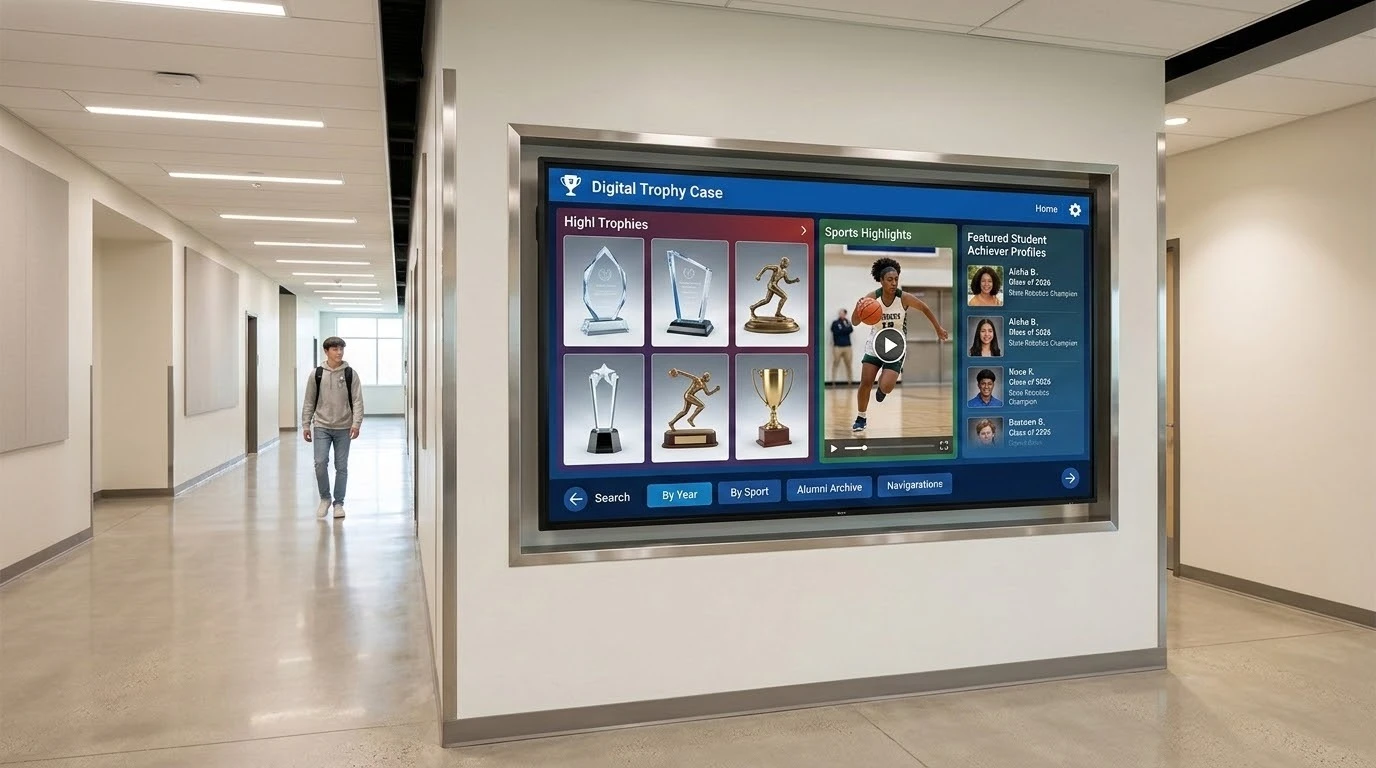
Schools across the country are shifting toward interactive screens in their main lobbies and athletic centers. A large touch screen display allows a school to feature thousands of awards without taking up any additional square footage. It completely changes how visitors interact with the space.
This is where implementing a digital trophy case makes the most practical sense. Instead of a physical object sitting silently behind glass, students and parents can walk up to a screen and tap to find exactly what they are looking for. They can search the database by graduating year, specific sport, academic department, or even a specific student’s name.
You can also provide real context. A physical plaque just has a name and a date. An interactive screen lets you include video clips of a winning touchdown or a photo gallery from the state science fair. The software running these displays usually operates on a cloud-based content management system. This means the athletic director, principal, or front office staff can update the content securely right from their laptop. They do not have to walk down the hall with a ring of keys to swap out a photograph.
Archiving Decades of School History
One of the most common headaches for a district office is dealing with alumni relations regarding older achievements. People care deeply about their legacy. Moving a 1980s debate team plaque to the storage closet often results in angry phone calls to the superintendent.
Digitizing these records solves the space issue while permanently preserving the history. You take high-quality photographs of the older, fragile trophies and plaques before they deteriorate further. You upload those images along with the complete roster of names. Many schools also scan old yearbooks and newspaper clippings to add to these profiles.
An electronic trophy case keeps that history accessible forever. If an alumnus visits the campus twenty years from now, they can simply search their graduating class and pull up their team picture and awards. It removes the emotional friction of physically boxing up old brass and wood. You can finally reclaim that wall space for modern facility upgrades while keeping the alumni base happy.
Space Constraints and Facility Management
Hallway space is premium real estate in any educational building. Many schools built in the mid-twentieth century were simply not designed for the sheer volume of extracurricular activities and sports programs that exist today. Hallways become congested.
By removing bulky glass cabinets, schools immediately open up cramped corridors. This improves student traffic flow between periods and eliminates bottlenecks. It also helps with ADA compliance by widening the clear path of travel. Facilities management can finally update wall finishes, paint, and lighting without having to work around immovable glass monoliths.
The hardware footprint of an interactive display is incredibly minimal. You basically need a reinforced commercial wall mount and a dedicated power and data drop. The screens themselves are built with durable, commercial-grade tempered glass designed for heavy public use. They handle daily physical interaction from high school students without issue. The footprint drops from a three-foot-deep cabinet to a screen that sits just a few inches off the drywall.
Managing the Transition
Moving from physical to digital recognition is a deliberate process. You do not just throw out the old hardware overnight. It requires a bit of planning and community buy-in. Booster clubs and PTAs are often willing to fund the initial hardware purchase because they immediately see the value in recognizing a wider variety of students.
Start by auditing what you currently have on display. Many districts turn this into a project for their students. You can assign a media or photography class to document every trophy and plaque. They catalog everything in a basic spreadsheet with the name, year, category, and a brief description. It gives students hands-on database and photography experience while saving the administration hours of manual labor.
Once the data is organized, you load it into your display software. A good strategy is to keep one or two highly visible physical cases for the current year’s biggest achievements. Let the brand new hardware sit behind glass for a few months. At the end of the school year, you photograph those items, migrate them to the screen, and clear the physical case for the incoming class. The combination of a streamlined physical display and a comprehensive interactive archive creates a much better experience for everyone walking through the front doors.
Scratch Cards Online All Casino Games Uk
Deposit 25 Get Free Spins Online Blackjack Uk
What Amounts Are Popular To Play At Minimum Deposit Casinos

Clint Eastwood Net Worth and Family Life: What You Didn’t Know

Best X Video Downloader Without Watermark — How to Get Clean HD Files

Inside Richard Hammond’s Life: How He Built His Net Worth
-
 Celebrity12 months ago
Clint Eastwood Net Worth and Family Life: What You Didn’t Know
-
 Technology5 months ago
Best X Video Downloader Without Watermark — How to Get Clean HD Files
-
 Celebrity11 months ago
Inside Richard Hammond’s Life: How He Built His Net Worth
-

 Celebrity11 months ago
Mark Normand net worth revealed: his career, lifestyle, and more