
Blog
Hyperscale Data Center Power Architecture for AI Growth

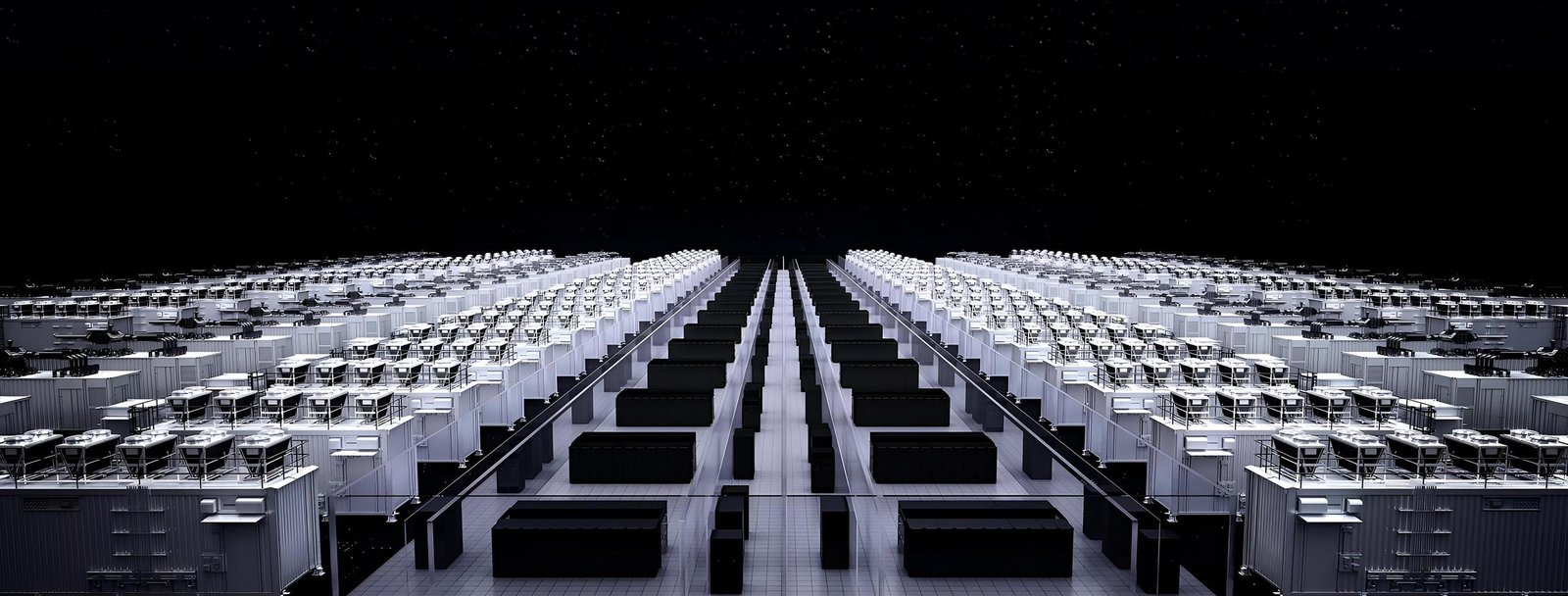
At a large cloud campus, the electrical design must support rapid installation of new server clusters while keeping existing capacity available. For hyperscale data center, system interfaces shape the real outcome. Huawei Digital Power outlines a facility portfolio that combines smart power supply, cooling, monitoring, and modular construction. The products have separate duties, but their interfaces determine whether computing capacity can be added without interrupting existing halls.
Design the power path around the IT load
Medium- and large-scale halls generally separate incoming utility distribution, UPS protection, battery backup, and downstream distribution to the IT load. Huawei positions smart power supply and distribution as components of its data center facility offering; electrical redundancy must still be engineered for the selected topology and local standards.
Power capacity planning begins at rack demand and works upstream. Engineers map expected utilization, diversity between clusters, short-duration load changes, and the consequences of losing a supply path before choosing transformer, switchgear, and UPS ratings.
Match cooling to dense computing
The smart cooling portfolio addresses heat removal at room and infrastructure level, while deployment decisions depend on rack heat density and acceptable inlet conditions. Liquid and air-based methods can be used in different areas of a campus, provided the thermal and hydraulic interfaces are properly coordinated.
Airflow management remains fundamental even where liquid cooling is deployed for processors. Containment, return-air paths, sensor placement, and equipment clearance influence how consistently the cooling system protects adjacent electronics.
Use monitoring to connect facility systems
Data center management systems can consolidate information from power equipment, cooling devices, and environmental sensors. A DCIM layer such as NetEco6000 gives facility teams a way to examine alarms and trends, while on-site protection and control remain within the equipment designed for those functions.
Historical trends can inform decisions about power-module additions, thermal rebalancing, and preventive inspections. They are not a substitute for a maintenance plan or for testing failure scenarios under controlled conditions.
A useful design deliverable is a rack-to-utility capacity map showing which critical load depends on which power and cooling assets. It allows later expansion decisions to be checked against actual paths rather than generic campus capacity.
Commission each expansion as a system
The facility portfolio includes smart modular and prefabricated modular data center approaches. Their value lies in pre-integration and repeatable interfaces, but each new module still has to be checked against the site grid connection, fire design, network routes, and existing controls.
Operators often benefit from standardizing labels, maintenance procedures, and monitoring points across buildings. Such consistency shortens the time required to diagnose anomalies when different halls were constructed years apart.
For hyperscale operators, the decisive issue is how power, thermal management, monitoring, and modular delivery work together through successive growth phases. Product capabilities provide the building blocks; the site-specific load model, redundancy design, and commissioning process determine their practical value. For hyperscale data center, The equipment datasheet, integration drawings, and acceptance tests should all describe the same operating limits.

Hyperscale Data Center Power Architecture for AI Growth

Tom Kennedy and Radhakishan Damani: A Closer Look Today

5G Site Power Planning for Distributed Radio Networks

Clint Eastwood Net Worth and Family Life: What You Didn’t Know

Best X Video Downloader Without Watermark — How to Get Clean HD Files

Inside Richard Hammond’s Life: How He Built His Net Worth
-
 Celebrity1 year ago
Clint Eastwood Net Worth and Family Life: What You Didn’t Know
-
 Technology7 months ago
Best X Video Downloader Without Watermark — How to Get Clean HD Files
-
 Celebrity1 year ago
Inside Richard Hammond’s Life: How He Built His Net Worth
-

 Celebrity2 years ago
Guy Willison Net Worth: The Story Behind the Motorcycle Legend